The art of the mixtape: a short history and how to make a good one
By the Mixtape Mood team · 6 min read · Updated
From the 1963 compact cassette to playlists today: where mixtapes came from, and the old rules for making one that still work.
A mixtape was never just a list of songs. It was something one person made for another, by hand, in real time, and the order of the songs was part of the message. That’s the idea Mixtape Mood is named after: not a playlist that goes on forever, but a short, finished tape made for one moment.
From cassette to Walkman
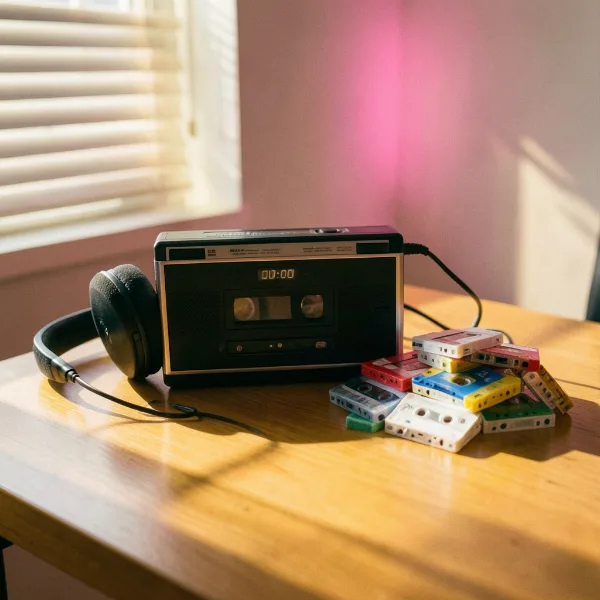
Philips introduced the compact cassette in 1963, at the Berlin radio show. It was meant for dictation and speech, but it was small, cheap and recordable, and by the 1970s people were using it to record music from records and the radio. In 1979 Sony released the Walkman, and suddenly your tape went with you: on the bus, on a walk, on the way to school.
Making tapes became a habit for a generation. You’d sit by the stereo with your finger on the pause button, waiting for the radio DJ to stop talking. In the UK the record industry ran a campaign in the early 80s with the slogan “Home Taping Is Killing Music”. People kept taping anyway, and many of them went on to buy the albums they first heard on a friend’s tape.
Side A and side B
A C60 cassette held 30 minutes a side, a C90 held 45. That limit shaped the craft. You couldn’t include everything, so every song had to earn its place, and a tape had two halves with a pause in the middle while you turned it over. Side A often set the scene; side B could go somewhere new.
The old rules that still work
Nick Hornby’s 1995 novel High Fidelity has a famous passage about how hard it is to make a good tape, and most people who made them would agree with its main points. Here are the rules worth keeping, whether you make a tape by hand or with us:
- Open strong. The first song tells the listener what kind of tape this is. Make it one they’ll love.
- Shape the energy. A good tape rises and falls like a conversation: build, ease off, build again. Twelve songs at the same intensity feel shorter than they are.
- Watch the joins. The end of one song and the start of the next matter. Big jumps in tempo or mood can work, but only on purpose.
- One song per artist, usually. It keeps the tape surprising and makes room for discoveries.
- Mix the familiar with the new. A couple of songs everyone knows make it easy to trust the rest.
- End on purpose. The last song is what stays in the air. Leave them with a feeling, not a fade.
Why a short tape still beats an endless playlist
Streaming made music almost limitless, which is wonderful and also a little overwhelming. A short tape forces choices, and choices are what make a mix feel personal. That’s why every Mixtape Mood tape is twelve songs, roughly the length of one side of a C90, with a title and a liner note, like the ones people used to write on the J-card inside the case.
Making one with Mixtape Mood
Tell us the moment, and we pick twelve real songs, check each one against music catalogues, and give the tape a name and a cover in the mood’s colours. You can untick songs you don’t want, ask for a calmer or livelier version, save it in your browser or share a link. Then listen where the music lives: previews here, full songs on YouTube, or links to Spotify and Apple Music, so the artists get paid.
Tapes to go with it

Make one for your mood
Say how you feel in your own words and get twelve real songs picked for it, free and without an account.
Make my mixtape